Alex Parisi with MSC Cruises
Share
BWBS is proud to welcome cruise lines to the program for the first time ever in 2026. Cruise lines are unique program participants in that their business model is all about moving people around to experience the ocean and coastlines – which of course offers the program an exciting opportunity to reach new audiences and share about why protecting the oceans matters so much for biodiversity and our own health. We asked Alex Parisi with MSC Cruises a few questions to hear more about life at sea, some of the unforgettable experiences the ocean brings, and why MSC Cruises is so willing to play its part for whale and marine protection.
Can you introduce yourself and explain what region of the globe you call home when not aboard a cruise ship?
My name is Alex Parisi, and I am the Senior Manager of Itinerary at MSC Cruises, working within the Fleet Operations and Itinerary Planning Department. Originally from Genoa, Italy, a city with a strong maritime tradition, I have spent most of my professional life connected to the sea. I worked at sea for 11 years, progressing through the ranks up to Chief Officer, before moving ashore. I then gained around 10 years of experience in technical operations, including 5 years as a Safety Superintendent, before moving into itinerary planning. Today, I help plan and optimize itineraries across MSC Cruises’ fleet, balancing navigational safety, operational efficiency and environmental responsibility. I now live in London, UK, and continue to work closely with colleagues across the MSC Group.
What’s one or a few of the most interesting things you or your team members have seen out on the water?
During my years at sea, I was fortunate to see a wide variety of marine wildlife, including whales, sharks, sea turtles and dolphins. One of my most unforgettable experiences happened in the Yellow Sea. At night, as our ship moved through the water, the sea seemed to light up around us. I believe this was caused by bioluminescent plankton illuminating the water as the ship passed. Seeing the ocean glow in the darkness was truly remarkable and reminded me how extraordinary and fascinating the marine environment can be. Experiences like this stay with you and deepen your appreciation for the ocean and the importance of protecting it.
What’s something about life at sea, or a challenge it brings, that many people might not appreciate?
One thing people may not fully appreciate about life at sea is the level of responsibility that comes with the job, especially at a young age. When you are 20 or 25 years old, you may already be responsible for a navigational watch that contributes to the safety of thousands of people on board. You have to ensure that everything runs safely and smoothly, because the consequences of a mistake can be serious. Throughout my career, from my very first days as a cadet, I was taught that navigational safety must always come first. I also learned that working at sea means having a responsibility not only towards the people on board, but towards the marine environment. That sense of responsibility has stayed with me throughout my career and continues to shape the way I approach my work today.
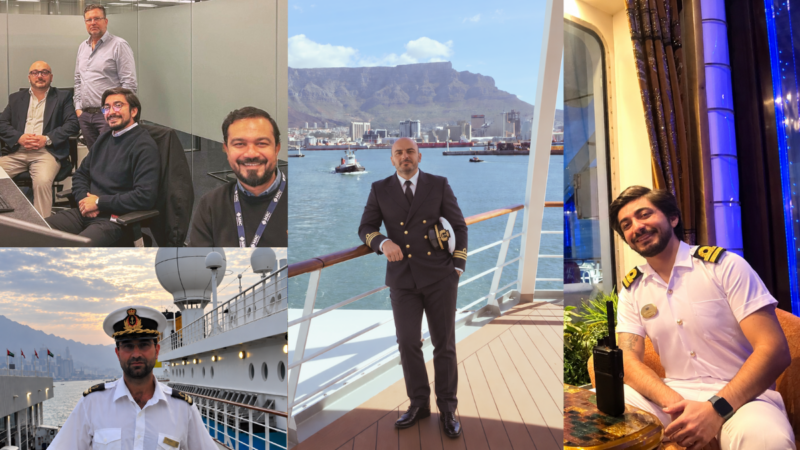
Credit: Alex Parsi with MSC Cruises; Dir. Roberto Surez; Yagiz Mert Kircali; and Tariqul Hassan.
What drew you to working at MSC Cruises?
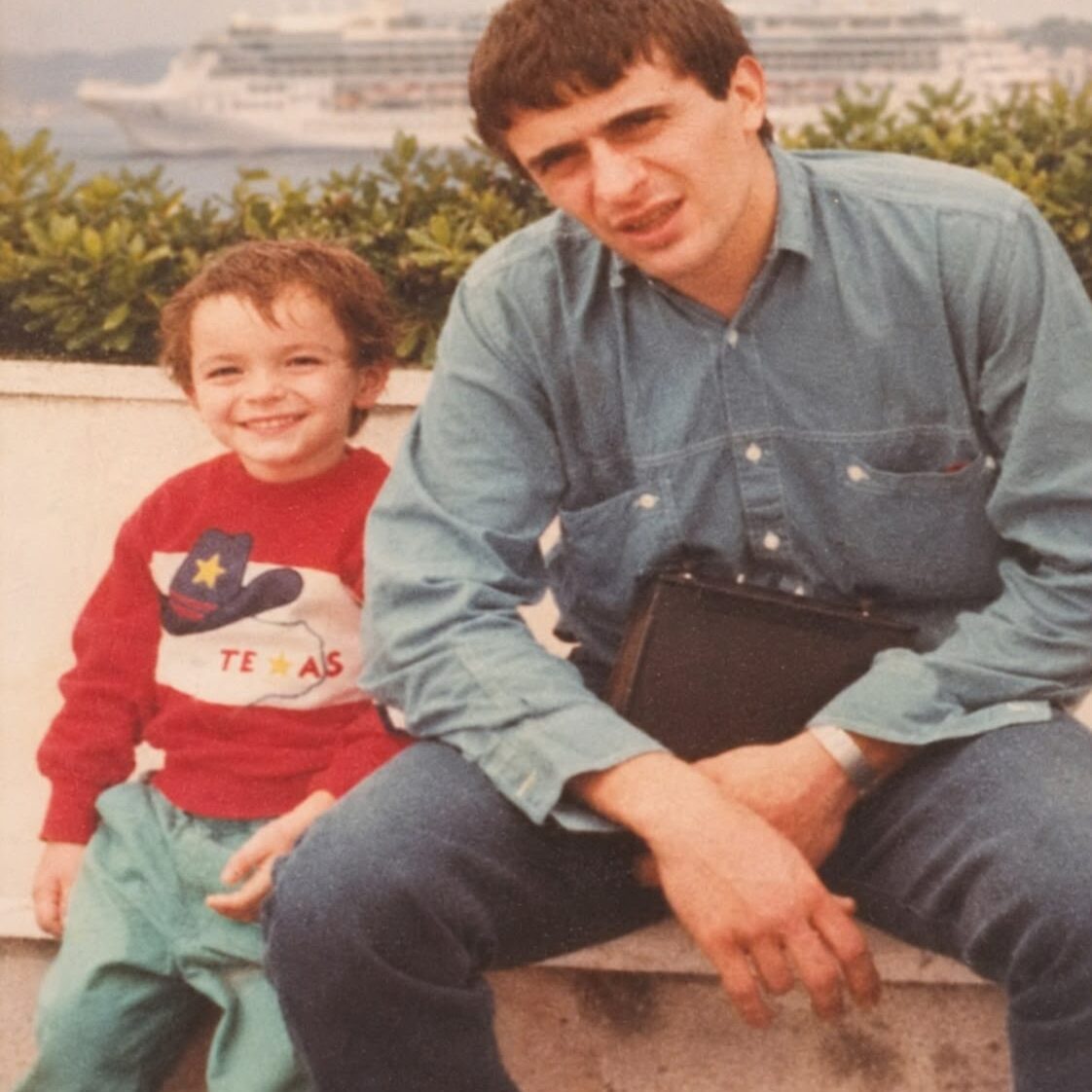
My passion for the sea began when I was a child growing up in Genoa, Italy. My father worked in the port, and on Sundays, when he was off duty, he would sometimes take me there. I remember looking at the passenger ships and dreaming that one day I would work on board as a deck officer. That dream led me to study at the San Giorgio Nautical Institute in Genoa. One memory that has stayed with me dates back to when I was 16. During a school voyage from Genoa to Barcelona, we were allowed to spend time on the bridge with the officers. I remember looking out over the sea at night, with the stars above us and the lights of other ships scattered across the darkness. It was a special moment that confirmed what I wanted to do with my life. Looking back, that childhood dream became my career, and my connection with the sea has remained with me ever since.

Credit: Alex Parisi with MSC Cruises; “Childhood memory with my dad, somewhere along the Ligurian coast, around 1990.”
What is your job like, and can you share any favorite parts?
As Senior Manager of Itinerary at MSC Cruises, one of the parts of my job I enjoy most is planning itineraries and finding practical ways to help protect whales and other marine mammals. Through careful itinerary planning and collaboration with colleagues, we can explore ways for our ships to operate responsibly while reducing the risk of harm to marine wildlife. For me, this is an important part of my role because it allows us to turn environmental awareness into practical action. Knowing that the work we do behind the scenes can contribute to protecting the marine environment gives a deeper meaning to my job.
Why did MSC Cruises decide to join BWBS, and how does it fit with its larger efforts to protect the marine environment?
MSC Cruises’ participation in BWBS reflects a wider commitment across the MSC Group to reducing the risk of whale–ship strikes and protecting the marine environment. Our team in London works closely with colleagues our cargo colleagues in MSC, who were already involved in the programme. My first direct contact with BWBS came through Jessica, whom I met at a conference in London focused on reducing whale–ship strikes. That meeting helped us learn more about the programme and its approach. When the opportunity was extended to cruise ships, we were very pleased to participate. What impressed us about BWBS was how well organised and coordinated the programme is, bringing together different stakeholders around a shared objective.
For us, the most important point is that protecting whales is the real goal. We would continue to respect applicable speed limits and navigational measures regardless of whether a recognition programme existed. BWBS provides a valuable framework for collaboration and helps strengthen our efforts, but our motivation is to reduce the risk of whale–ship strikes and make our operations more responsible, rather than to receive an award or recognition.
How do you hope your participation in this program will inspire your guests and other cruise lines to take action for ocean conservation?
We hope that MSC Cruises’ participation in BWBS will help raise awareness among our guests and demonstrate to other cruise lines that protecting whales can be an integral part of responsible cruise operations.
This effort is built on collaboration, including internally with MSC Group colleagues. Our team in London works closely with colleagues at MSC Group’s headquarters in Geneva and with our colleagues in MSC Cargo, sharing experience and working together towards the common goal of reducing the risk of whale–ship strikes. We believe that collaboration across different parts of the shipping industry is essential to making a real difference. By working together and sharing best practices, we hope to encourage other companies to take similar steps and inspire our guests to better understand the importance of protecting marine wildlife. Ultimately, our goal is not simply to participate in a programme, but to contribute to a lasting positive impact on the marine environment.
Anything else you’d like to share?
I remember attending a conference on reducing whale–ship strikes where a question was raised about why shipping companies should follow speed limits when doing so can increase operational costs. It is a fair question, because these measures can have real operational and financial implications. However, I believe there is another important side to consider. People working at sea often spend many years surrounded by the ocean, experiencing its power and developing a deep respect for the marine environment. When you see a whale dead in the water and know that your industry can take practical steps to reduce the risk of such incidents, it becomes difficult to simply look the other way. If we can do something to help, then we have a responsibility to try. This commitment cannot come from one individual or one department alone. Making a meaningful difference requires the support of the entire organisation, from top management to our commercial colleagues and shipowners. We have always received that support at MSC Cruises, and it is something we truly value. For a company operating a fleet of 23 ships, respecting speed limits and adapting itineraries can have a real operational and financial impact. It can mean increased costs. These are important considerations that must be carefully assessed as part of our planning. Nevertheless, MSC Cruises continues to support these efforts because we believe that protecting marine wildlife is worth it. This is not about recognition or awards; it is about taking responsibility for the impact our operations can have and doing what we can, as a company, to reduce the risk of whale–ship strikes. Ultimately, protecting the ocean requires commitment, collaboration and the willingness to turn good intentions into practical action. We are proud that MSC Cruises is willing to play its part.