Reducing the Risk of Ship Strikes to Endangered Whales
Reducing speeds saves whales. Our program proves that voluntary speed reductions significantly cut fatal strike risk, protecting endangered species while keeping global trade moving.
Photo: Dustin Harris

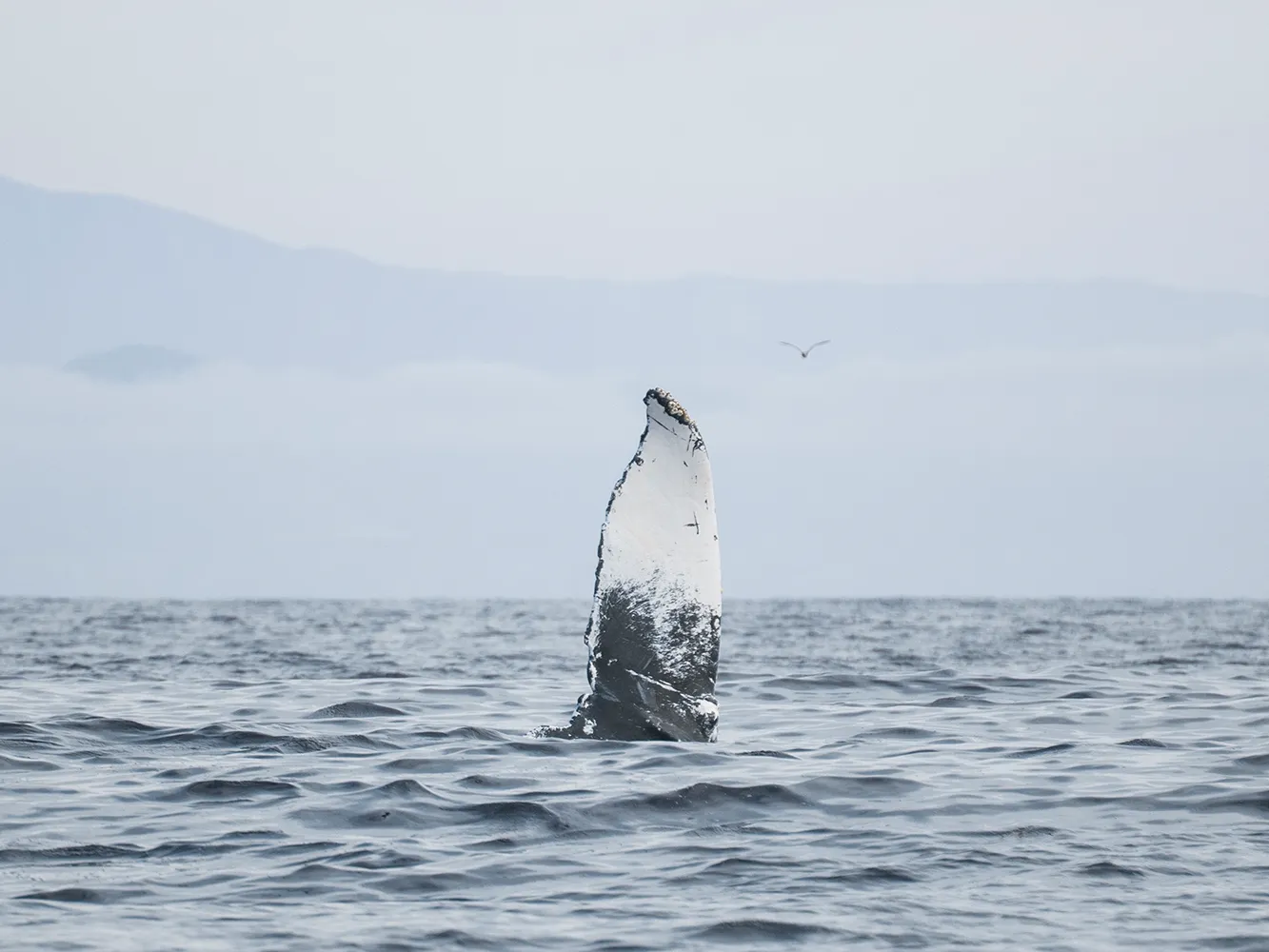
Photo: Adam Ernster
The Facts
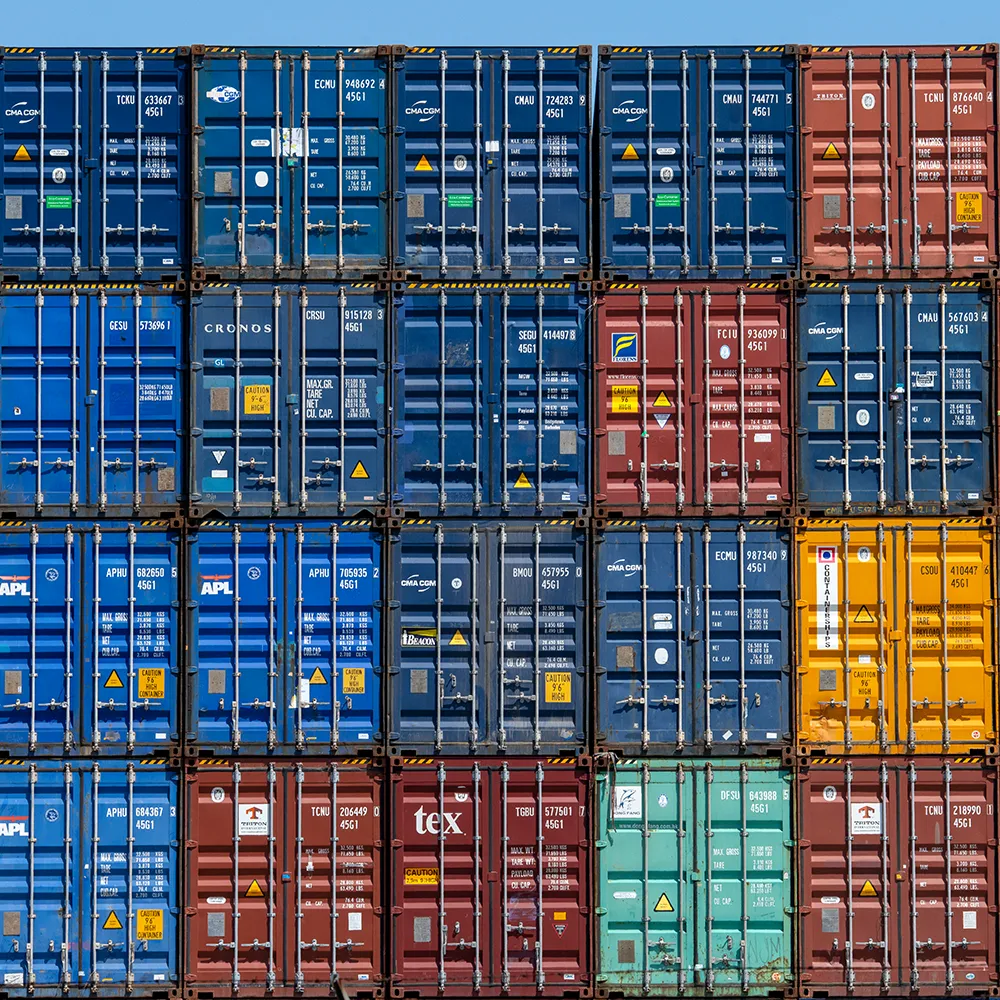
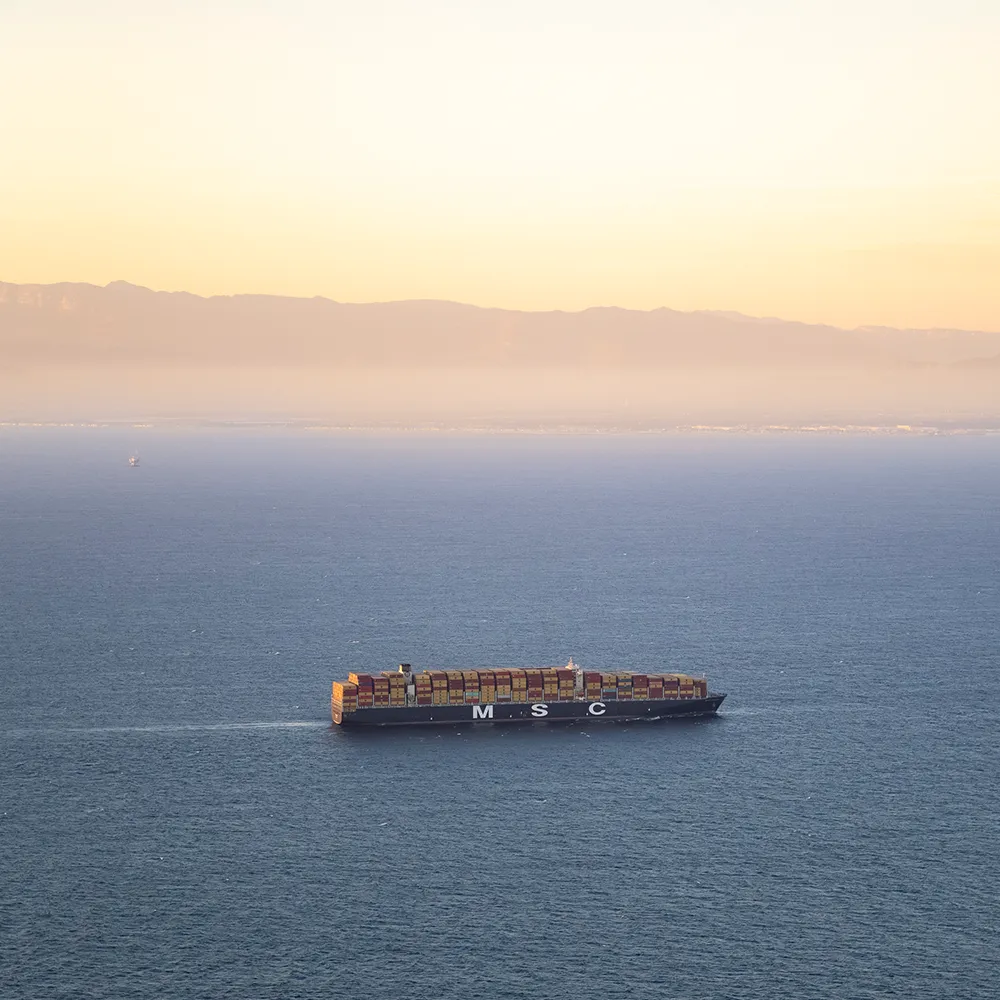
Massive cargo ships carrying the products and goods we rely on transit through key whale feeding and migration areas.

Ship strikes are one of the main threats to endangered and threatened whales.
Research shows that ships traveling at 10 knots or less reduces risk to whales. Reduced vessel speeds reduces the probability that a collision will occur by giving whales more time to avoid oncoming vessels.
During the 2025 VSR Season, the reduced transit speeds of participating vessels posed 40% less risk to whales compared to the baseline of transits in the area in 2016.
One Strategy for Safer Whales
Whales aren’t the only giants in the ocean. Massive cargo ships carrying the products we purchase transit through whale feeding and migration areas on their way to and from ports along the U.S. West Coast. Ship strikes are one of the main threats to endangered whales. Research shows that ships traveling at 10 knots or less significantly reduces the risk of fatal ship strikes.
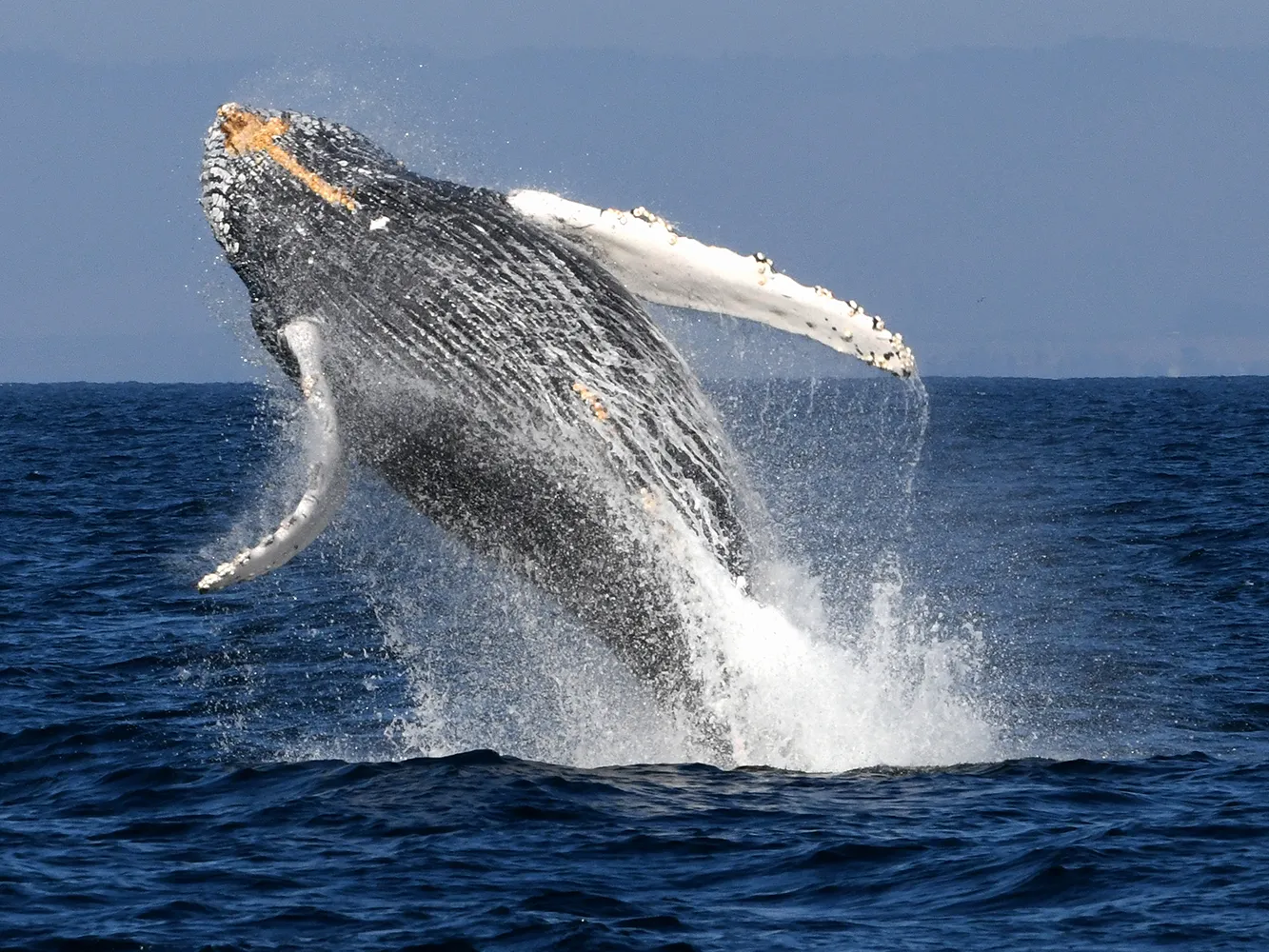
Photo: Robert Schwemmer
How We Measure Progress
Our scientifically validated risk reduction models are used to calculate ship strike risk reduction resulting from the program.
Verification Partners
The program works with third-party researchers and consultants to calculate the environmental benefits of participation.

Take Action To Reduce Whale Strikes
Enroll your Fleet
Any company who operates container, car carrier, bulk cargo, or tanker vessels that pass through the Vessel Speed Reduction (VSR) Zones is eligible.
Photo: Ralph Clevenger Wildlife
Become An Ambassador
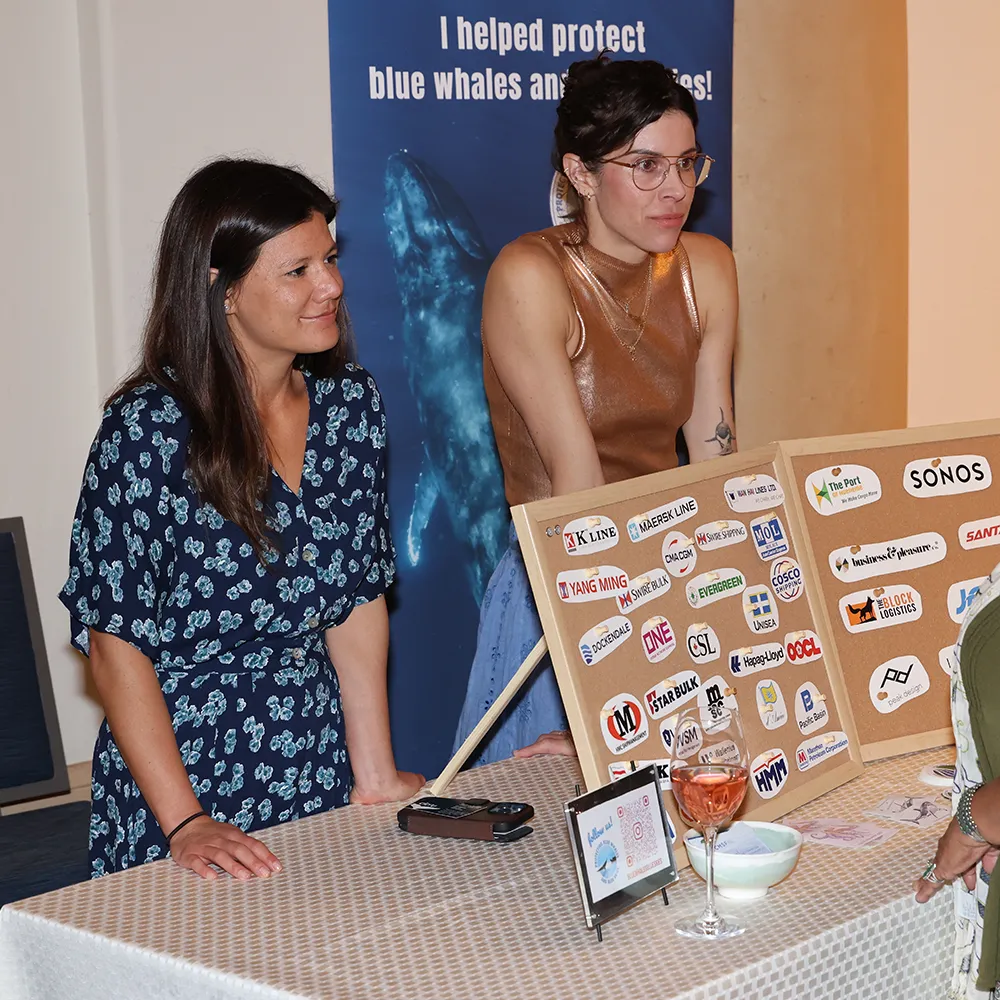
Any company that ships goods with, or works with one or more participating shipping line is eligible to join.
Get Involved
Supply chain practices matter for biodiversity and air quality. Support responsible shipping practices for cleaner coastal air, safer whales, and a quieter ocean.
Photo: Robert Schwemmer