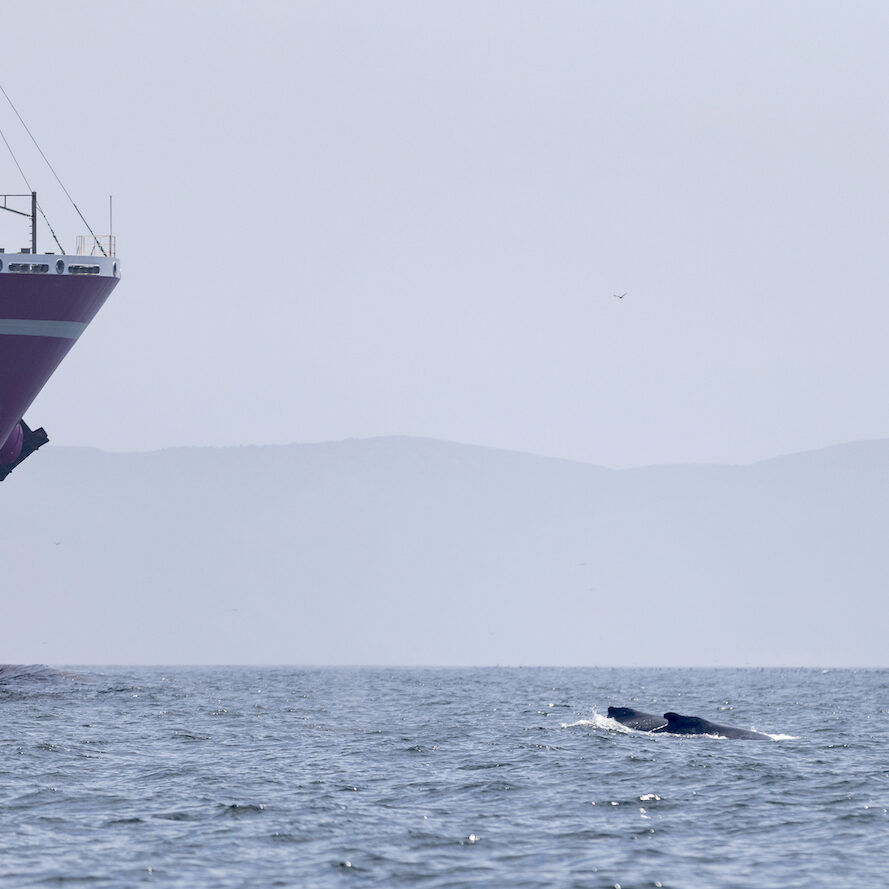
2025 Program Environmental Benefits Results: Voluntary Efforts Effectively Protect Whales, Clean Air
Environmental analyses show major reduction in underwater radiated noise pollution, strike risk, and air pollution impacting coastal California.
Share
Researchers have verified that the 2025 Protecting Blue Whales and Blue Skies (BWBS) program resulted in a reduction of more than 50,000 metric tons of regional greenhouse gas emissions, a 40% lower risk of ship strikes to whales and a 70% decrease in the underwater noise acoustic intensity that negatively affects whales.
BWBS encourages and verifies efforts by global shipping lines including container, bulk, tanker, car carriers and, in 2026, cruise lines, transiting along California’s coast to cooperate with Vessel Speed Reduction (VSR). VSR is a proven, effective way to protect coastal communities’ public health, reduce risk to endangered and threatened whales, and limit underwater radiated noise pollution.
After each VSR Season, BWBS analyzes vessel AIS data to determine enrolled fleets’ cooperation levels and works with research partners to calculate how industry’s voluntary efforts translate to quantifiable environmental benefits in terms of reduced air pollution and emissions, underwater noise, and fatal ship strike risk to whales.
For the 2025 Season, BWBS verified that 787 vessels across 44 global shipping lines voluntarily reduced their speeds for over 481,000 nautical miles in key areas off of the California coast. For more detailed information on the top-performing shipping lines and their 2025 award rankings, see here, and further below.
Analyses related to reduced risk of fatal strikes, ocean noise, air pollution and emissions for the 2025 VSR Season can be found here. Highlights include:
Ship Strike Risk Reduction
2025 Results: Research partner Dr. Anna Nisi with the Center for Ecosystem Sentinels at the University of Washington quantified the reduction in fatal ship strike risk to blue, fin, and humpback whales. Dr. Nisi’s analyses show that the reduced speeds of transits of participating vessels during the VSR season posed 40% less risk to whales when compared to the baseline of transits in the area in 2016. This updated analysis integrated the latest peer-reviewed work (Garrison et al. 2025) that quantifies the relationship between vessel speeds and the probability of mortality in the event a collision occurs. Dr. Nisi explains,
This year, we updated our ship-strike risk models to incorporate the latest science, which shows that collisions with large vessels are likely to be lethal, even when vessels are traveling more slowly. This resulted in lower estimates of risk reduction compared to prior years. However, reducing vessel speeds remains a key way to reduce the probability that a collision will occur in the first place, by giving whales more time to avoid oncoming vessels. The reductions in risk due to cooperation with VSR in the 2025 season is substantial, and meaningfully protects the endangered and threatened whale populations in California waters.
Context: Globally, the leading causes of mortality to whales include collisions with large vessels and entanglements. One of the main goals of BWBS is to decrease the risk of fatal ship strikes to endangered and threatened whales during the period of the year when their abundance and distribution across the VSR zone is greatest. Lower speeds reduce the risk of collisions by allowing whales to avoid vessels. This benefit scales with the number of participating vessels and total distance traveled at safer speeds.
Underwater Noise Pollution
2025 Results: Research partner Dr. Vanessa ZoBell from the Scripps Institution of Oceanography analyzed acoustic data and found that, across all VSR zones, the overall program reduction in underwater radiated noise for the 2025 VSR Season was 5.2 dB. This equates to a 70% reduction in acoustic intensity (or a 45% reduction in sound pressure). Dr. ZoBell explains how these results shape the underwater acoustic world of a whale:
When ships are quieter, their noise pollution footprint contracts. That means ship noise propagates over a smaller area of the ocean, reducing the number of animals exposed to noise pollution. Additionally, for any whales within a passing ships’ noise footprint, VSR reduces the sound pressure, which is a critical measure for biological exposure.
Context: Sound travels approximately four times faster in the water than by air. Whales have evolved over millions of years to use sound as their primary mode of perceiving the world. They use sound to navigate, forage and communicate, among other daily life functions. Excessive noise pollution disrupts these essential behaviors, threatening whales’ ability to thrive. Implementing vessel speed reduction programs in regions with high whale presence is a crucial step in mitigating the harmful effects of chronic noise pollution to protect these species.
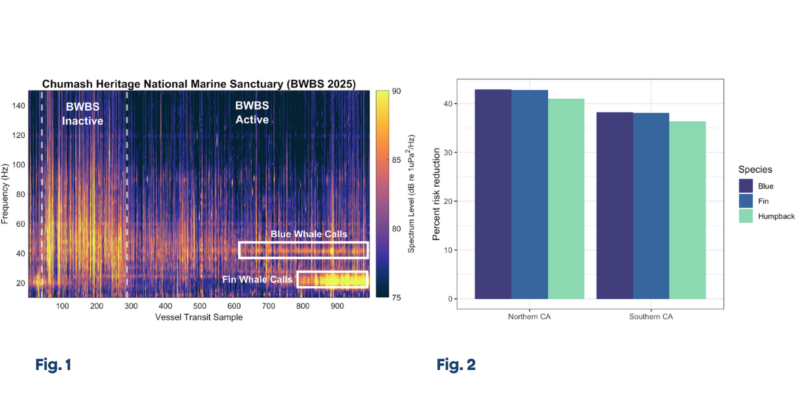
Fig. 1: Ocean sound levels within the Chumash Heritage National Marine Sanctuary for the BWBS 2025 VSR Season. Ambient sound levels were higher while the program was inactive. Whale song is visible in the program’s active period.
Credit: Conti M., Peavey Reeves L.E., Haver S., Frasier K.E, ZoBell V.M. Underwater Radiated Noise Levels of Participating Vessels during the 2025 Protecting Blue Whales and Blue Skies Program. Final Report. Marine Physical Laboratory Technical Memorandum 684. March 2026.
Fig. 2.: Reduction in ship-strike risk for BWBS-enrolled vessels during the BWBS 2025 VSR Season relative to vessel behavior in 2016, by species and region. Credit: Nisi, Anna
Air Quality & Greenhouse Gas Emission Reductions
2025 Results: Research partner Starcrest Consulting Group, LLC performed the emissions reduction calculations that informed BWBS’ results for the 2025 VSR Season on reducing air pollution. The analysis shows the program resulted in estimated reductions of:
- 1,491 tons of nitrogen oxides (NOx)
- 8.9 tons of diesel particulate matter (DPM)
- 37 tons of oxides of sulfur (SOx)
- 55,771 metric tons of greenhouse gases (carbon dioxide equivalent)
Context: Large oceangoing vessels that travel along the California coastline and into the state’s ports are a significant source of air pollution. These vessels emit NOx and other combustion-related pollutants, such as particulate matter (PM), SOx, and greenhouse gases. In general, emissions are estimated based on the power demand from the vessel’s equipment, with vessel speed being a driving factor in the calculation. Reducing a ship’s speed typically reduces the emissions by about 20% to 25%, as the slower speeds result in decreased engine load and fuel consumption. With California’s onshore prevailing winds, emissions from oceangoing vessels often flow into coastal communities, contributing to exceedances of the state and federal air quality standards designated to protect human health. Most exceedances for ozone occur during the warmer months, thus voluntary cooperation with VSR during this time period is especially critical to reducing emissions and protecting public health.
Participating Shipping Lines
BWBS is proud to recognize the achievements of the participating shipping lines that make these environmental benefits possible. These include:
Sapphire Award Winners: CMA CGM; MSC; COSCO; NYK-RoRo; Yang Ming; OOCL; Hapag-Lloyd; Marathon Petroleum; OSG Ship Management; ConocoPhillips Polar Tankers; CSL Americas; Wan Hai Lines; Scorpio Group; Seaspan Corporation; Swire Shipping; BP Shipping Ltd.; Campbell Shipping Company; GoldenKing Ship Management Co.; Toyofuji Shipping Co.; Unity Ship Management; Hakuyo Kisen KK; and Nhat Viet Transportation Corporation. Gold Award Winners: Maersk; ONE; Evergreen; Mol ACE; Wallenius Wilhelmsen; Liberty Maritime; Eastern Pacific Shipping; Unisea Shipping Ltd; Canfornav; and Weihai Weitong Marine Shipping Co. Blue Sky Award Winners: Hyundai (UCC); K Line; Hyundai Glovis; D’Amico Group; Swire Bulk; Champion Tankers AS; Anglo-Eastern Shipmanagement; MT Maritime Management USA; Asan Merchant Marine Co. LTD; and Shih Wei Navigation. Participants: Pacific Basin and Gulf Energy Maritime.