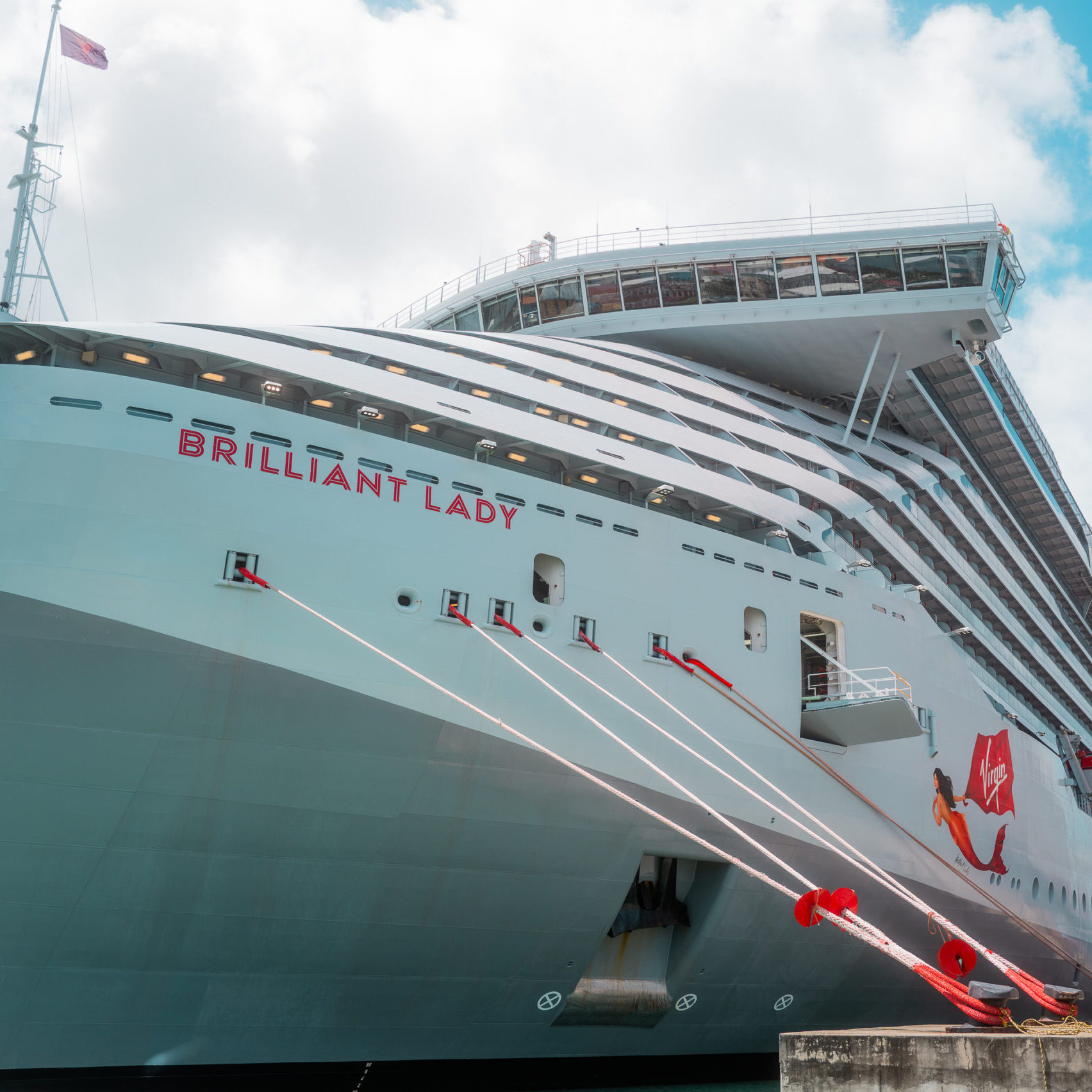
Captain Krzysztof Majdzinsk & Jill Stoneberg with Virgin Voyages
Share
BWBS was proud to welcome cruise lines to the program this year and to be now working with major cruise companies on voluntary efforts that protect whales and air quality all along the California coast. Thank you to Captain Krzysztof Majdzinsk and Jill Stoneberg, Sr. Director of Social Impact and Sustainability with Virgin Voyages for taking the time to share a bit about why “nothing beats a true sea day,” how they came to work for Virgin Voyages, the best (and challenging) parts of the job, as well as how our program fits with their other work to protect whales.
Credit: Virgin Voyages
Captain Krzysztof Majdzinsk
Can you introduce yourself and explain what region of the globe you call home when not aboard a cruise ship?
I’m Captain Krzysztof Majdzinski, though most people know me simply as Captain Kris, which saves everyone a few syllables! When I’m not steering ships across the globe, home is the historic coastal city of Gdańsk on Poland’s Baltic coast, where my love for the sea first began.
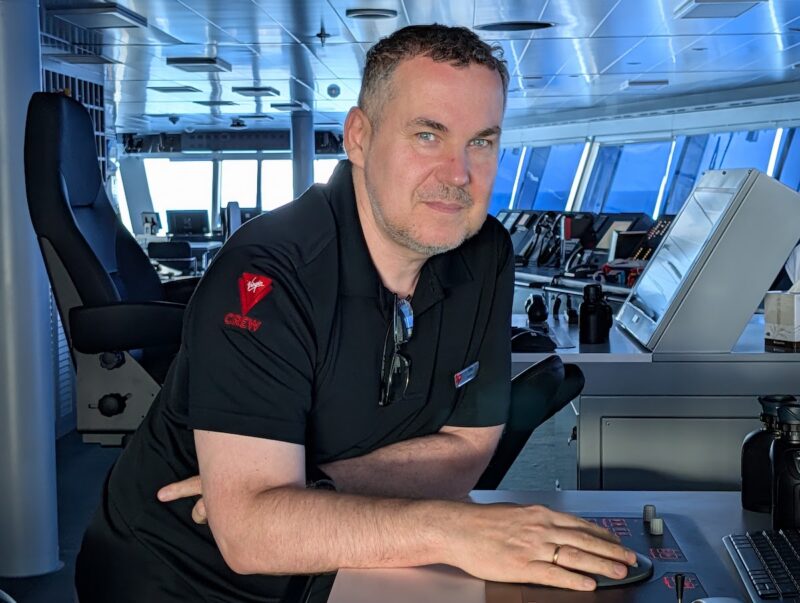
Captain Krzysztof Majdzinski
What’s one or a few of the most interesting things you’ve seen out on the water?
I’ve been fortunate enough to sail nearly every corner of the world, from the tropical turquoise waters of the South Pacific to the icy silence of Antarctica where you’re sharing the bay with curious penguin colonies, basking leopard seals, and surfacing pods of orcas. What excites me most right now, though, is what’s happening along the West Coast and up toward Alaska. Over recent seasons, whale sightings have noticeably surged.
There’s nothing quite like standing on the bridge wings and watching a humpback breach against the horizon. It’s a powerful reminder that out here, we’re guests in their home.
What’s something about life at sea, or a challenge it brings that many people might not appreciate?
People often assume the thrill is all about reaching exotic ports, but for me, nothing beats a true sea day. There’s a rhythm to being surrounded by nothing but open horizon and open sky; it’s remarkably grounding.
The hidden challenge is that the ocean never sleeps. Even when conditions look calm and serene from a balcony, the bridge team is constantly reading subtle shifts in wind, swell, currents, and marine life movements. It takes total focus, yet provides a sense of peace you simply can’t find on land.
What drew you to becoming a Captain?
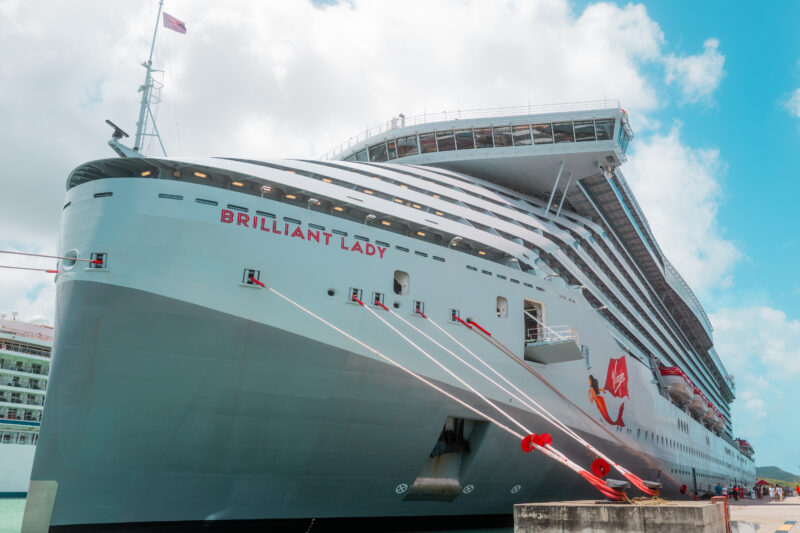
I didn’t come from a seafaring family, but around age 10, the sea hooked me and never let go. I didn’t set out with the master plan of becoming a Captain right away; I just wanted to be on the water, learning how ships move and how the oceans breathe. Decades later, standing at the helm of Brilliant Lady, I’d say 10-year-old Kris made a pretty solid career call.
What is your job like and can you share any favorite parts?
No two days are ever identical. Apart from having a different view every day, one moment you’re chatting with navigation officers about tuning a passage plan, and the next you’re walking the decks, soaking up the incredible energy of our Sailors and Crew. My favorite part is that transition point at dawn: standing on the bridge as the sun breaks over the water, knowing thousands of people onboard are waking up to an adventure.
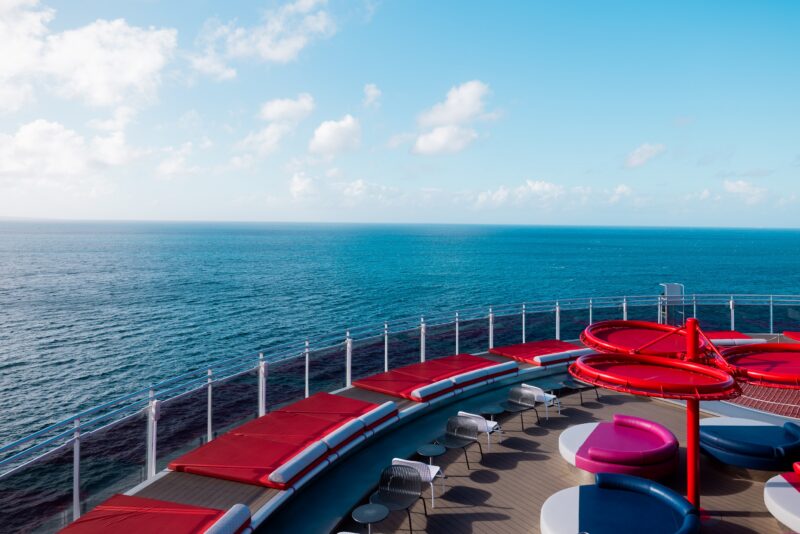
Credit: Virgin Voyages; Brilliant Lady view from the athletic deck
Jill Stoneberg, Sr. Director of Social Impact and Sustainability
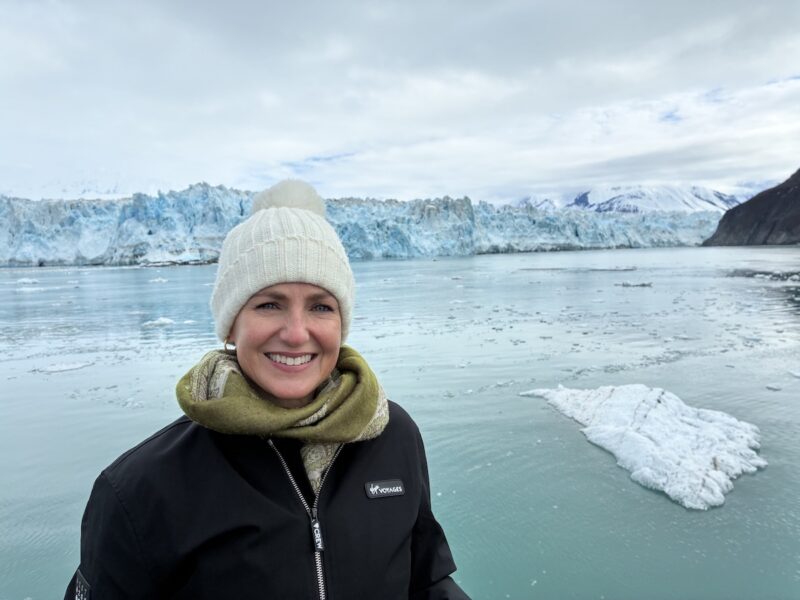
Jill Stoneberg
Why did Virgin Voyages decide to join BWBS, and how does it fit with your team’s larger efforts to protect the marine environment?
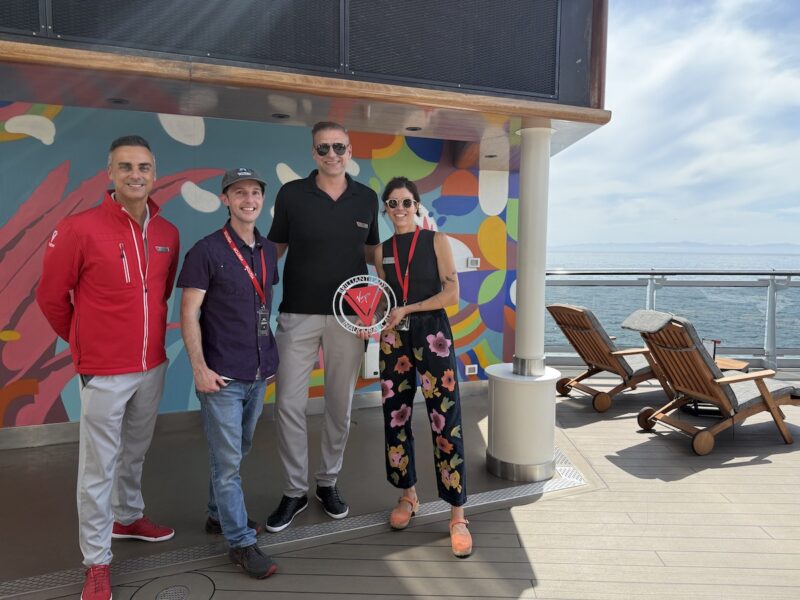
Members of the BWBS team with the Captain and crew aboard the Brilliant Lady (after it approached Santa Barbara at whale-safer speeds!)
Protecting our oceans matters to Virgin Voyages. It’s part of who we are, and the sea is the reason our Sailors come aboard in the first place. When we planned our West Coast itineraries a couple of years ago, we reached out to learn more about the program but at the time it wasn’t open to cruise lines. We’re delighted that it has now opened up, and we’re proud to support such an important initiative.
Our participation in BWBS complements our engagement with the non-profit partner, ORCA (based in the UK) and our whale avoidance training for our bridge team. It’s also a meaningful way to put our commitment to ocean protection into action in a way that is recognized and supported by the California communities we visit.
How do you hope your participation in this program will inspire your Sailors and other cruise lines to take action for ocean conservation?
We hope it inspires others to join, and that creates awareness with our Sailors on how cruise lines are involved in local conservation efforts.
Reducing speed helps prevent deadly whale strikes, which is something we can all get behind, provided we have sufficient lead time to adjust our itineraries accordingly.